
TRIONDA vs Previous World Cup Balls: What’s New in 2026?

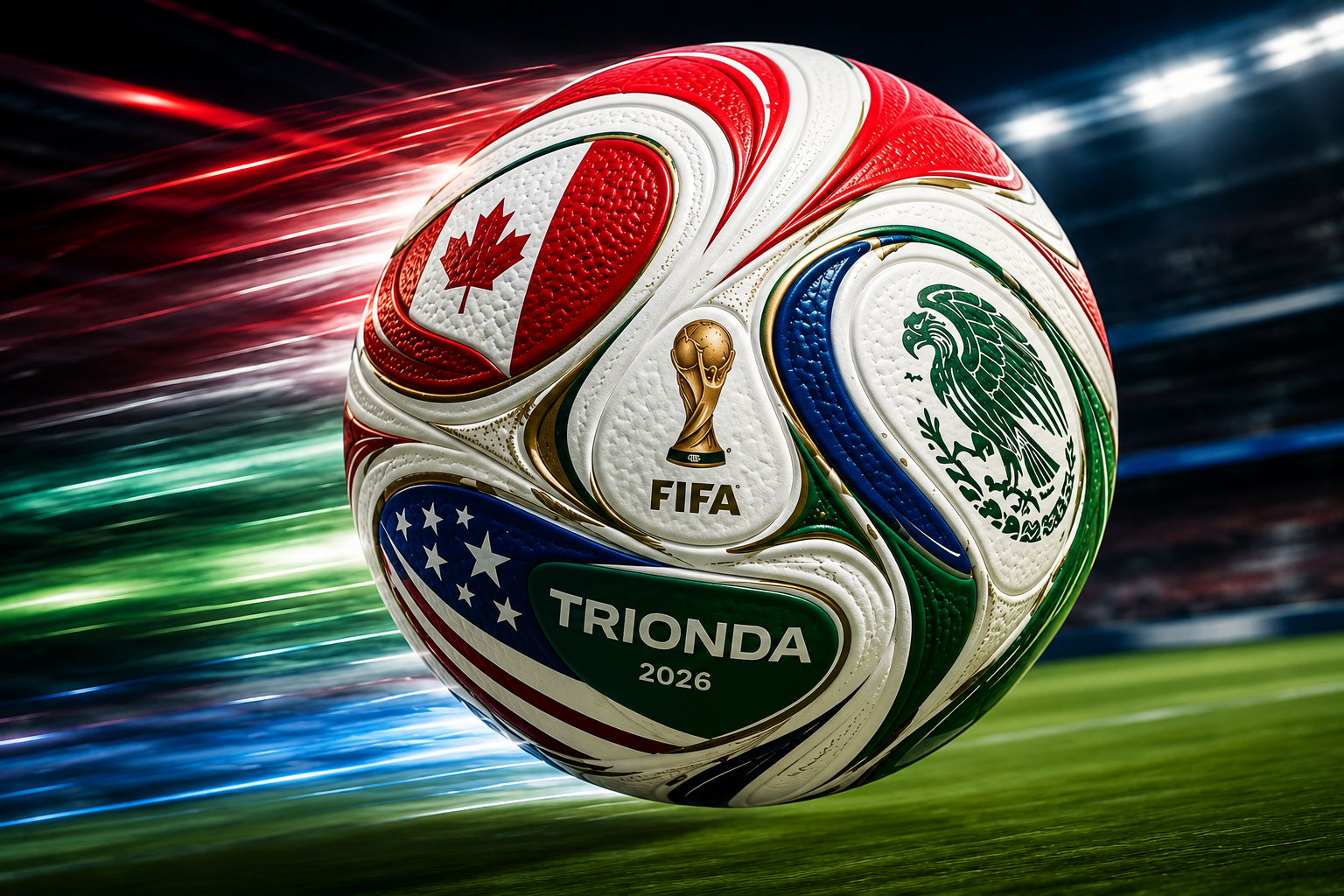
TRIONDA vs previous world cup balls all you need to know why this is in news. Why everyone is talking about TRIONDA, the FIFA World Cup 2026 Ball. Every FIFA World Cup introduces a new official match ball that becomes part of football history. From the iconic Telstar to the controversial Jabulani and the technologically advanced Al Rihla, each ball reflects the evolution of the game. For the FIFA World Cup 2026, adidas has unveiled TRIONDA, a football that combines cutting-edge technology, innovative design, and symbolic representation of the tournament’s three host nations: the United States, Canada, and Mexico.
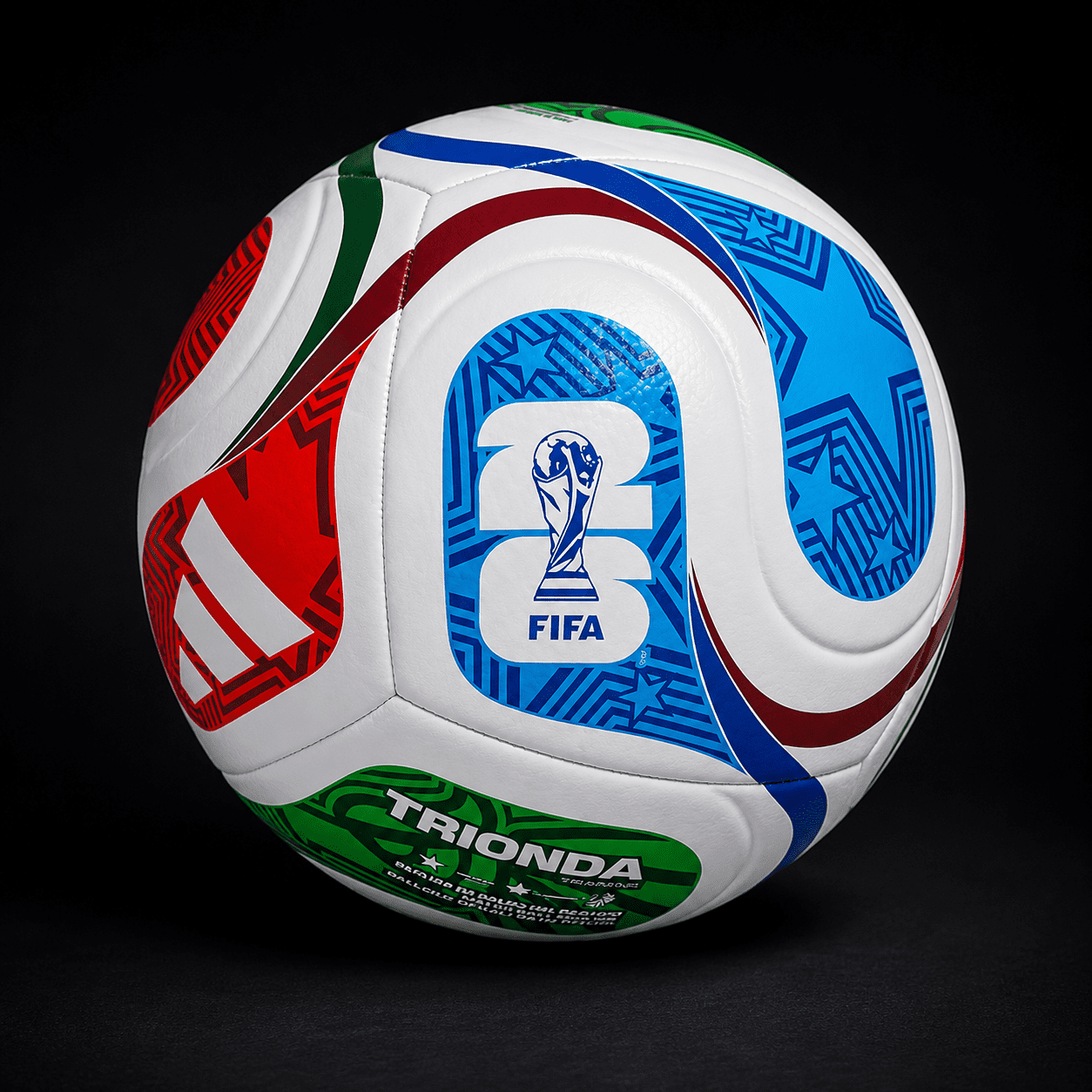
TRIONDA is the official match ball of the FIFA World Cup 2026, developed by adidas in collaboration with FIFA. The name “TRIONDA” translates roughly to “three waves,” symbolising the unprecedented partnership between Canada, Mexico, and the United States in hosting the tournament. The ball’s design and technology celebrate this historic three-country collaboration.
Unlike traditional World Cup balls, TRIONDA introduces a completely redesigned four-panel construction combined with enhanced connected-ball technology, making it one of the most sophisticated footballs ever used in a major tournament.
At first glance, TRIONDA stands out with its bold red, green, and blue color scheme. These colors represent the three host nations:
- Red for Canada
- Green for Mexico
- Blue for the United States
The ball also features national symbols, including Canada’s maple leaf, Mexico’s eagle, and America’s star, integrated into the visual design. Gold accents honor the FIFA World Cup Trophy and add a premium appearance.
The overall look is modern, vibrant, and instantly recognizable. While some football fans praise its futuristic appearance, others believe the design is too bold compared to classic World Cup balls. Community discussions online have been divided, with some supporters loving its distinctive identity while others describe it as overly commercialized.
Revolutionary Four-Panel Construction:
One of TRIONDA’s most significant innovations is its four-panel design.
Traditional footballs typically contain many more panels stitched or bonded together. By reducing the panel count, adidas aims to create:
- Better aerodynamic consistency
- Improved flight stability
- More predictable movement
- Enhanced accuracy for long passes and shots
The deep seams between panels help distribute airflow evenly around the ball, reducing unexpected swerves while maintaining enough movement to challenge goalkeepers. FIFA and adidas describe this as one of the most advanced aerodynamic structures ever used in a World Cup football.
Compared with previous World Cup balls such as Jabulani (2010) and Al Rihla (2022), TRIONDA appears designed to prioritize stability without eliminating the excitement generated by ball movement.
Perhaps the most groundbreaking aspect of TRIONDA is the upgraded connected-ball technology.
Inside the ball is a 500Hz motion sensor capable of transmitting real-time movement and contact data directly to match officials and VAR systems. This sensor tracks every touch, pass, shot, and deflection with remarkable precision.
The technology helps officials:
- Detect offside situations faster
- Improve handball decisions
- Verify ball contact moments
- Support semi-automated officiating systems
This innovation builds on the connected-ball technology first introduced at the FIFA World Cup Qatar 2022 but offers significantly greater accuracy and processing speed.
For players and fans, the sensor remains invisible and does not affect gameplay. However, behind the scenes, it could dramatically reduce controversial decisions.
Comparison With Previous World Cup Balls:
| Match Ball | Tournament | Key Innovation |
| Teamgeist | 2006 Germany | Thermal bonding technology |
| Jabulani | 2010 South Africa | Aerodynamic experimentation |
| Brazuca | 2014 Brazil | Improved flight stability |
| Telstar 18 | 2018 Russia | NFC and digital integration |
| Al Rihla | 2022 Qatar | Connected ball technology |
| TRIONDA | 2026 USA, Canada & Mexico | 500Hz sensor and four-panel design |
Some fans argue that recent World Cup balls prioritize branding over timeless aesthetics. Early online reactions show mixed opinions about TRIONDA’s appearance. As football becomes more data-driven, some supporters worry that technology could overshadow the human element of officiating. The enhanced sensor system will likely reignite debates surrounding VAR and automation. Like previous official World Cup balls, professional-grade versions of TRIONDA are expected to command premium prices, potentially placing them beyond the reach of casual players.
TRIONDA is far more than just the official match ball of the FIFA World Cup 2026. It represents the next generation of football technology, combining advanced aerodynamics, real-time tracking systems, and symbolic design into a single product.
The four-panel construction promises greater stability, while the 500Hz connected sensor brings unprecedented precision to officiating decisions. Add a visually striking design inspired by three host nations, and TRIONDA becomes one of the most innovative World Cup balls ever created. If the FIFA World Cup 2026 aims to showcase the future of football, TRIONDA is the perfect ball to lead that vision. Combining performance, innovation, and symbolism, adidas has created a match ball capable of defining an entire World Cup generation.

Indrajit Gupta
Welcome to my sports blog! I'm the founder and author of Blazefields, a sports-focused platform created to share accurate, engaging, and insightful content with fans around the world. As a passionate follower of football and cricket, I enjoy covering match previews, player biographies, tournament updates, transfer news, statistics, and in-depth analysis of the biggest sporting events. My goal is to provide readers with reliable information and a better understanding of the games they love. Every article is researched carefully to ensure quality, accuracy, and value for sports enthusiasts of all levels. Through Blazefields, I aim to build a trusted destination where fans can stay updated, discover inspiring player stories, and enjoy comprehensive sports coverage. Sports have the power to unite people, create unforgettable memories, and inspire future generations, and I am proud to share that passion through this platform. Thank you for visiting Blazefields and being part of this growing sports community.